
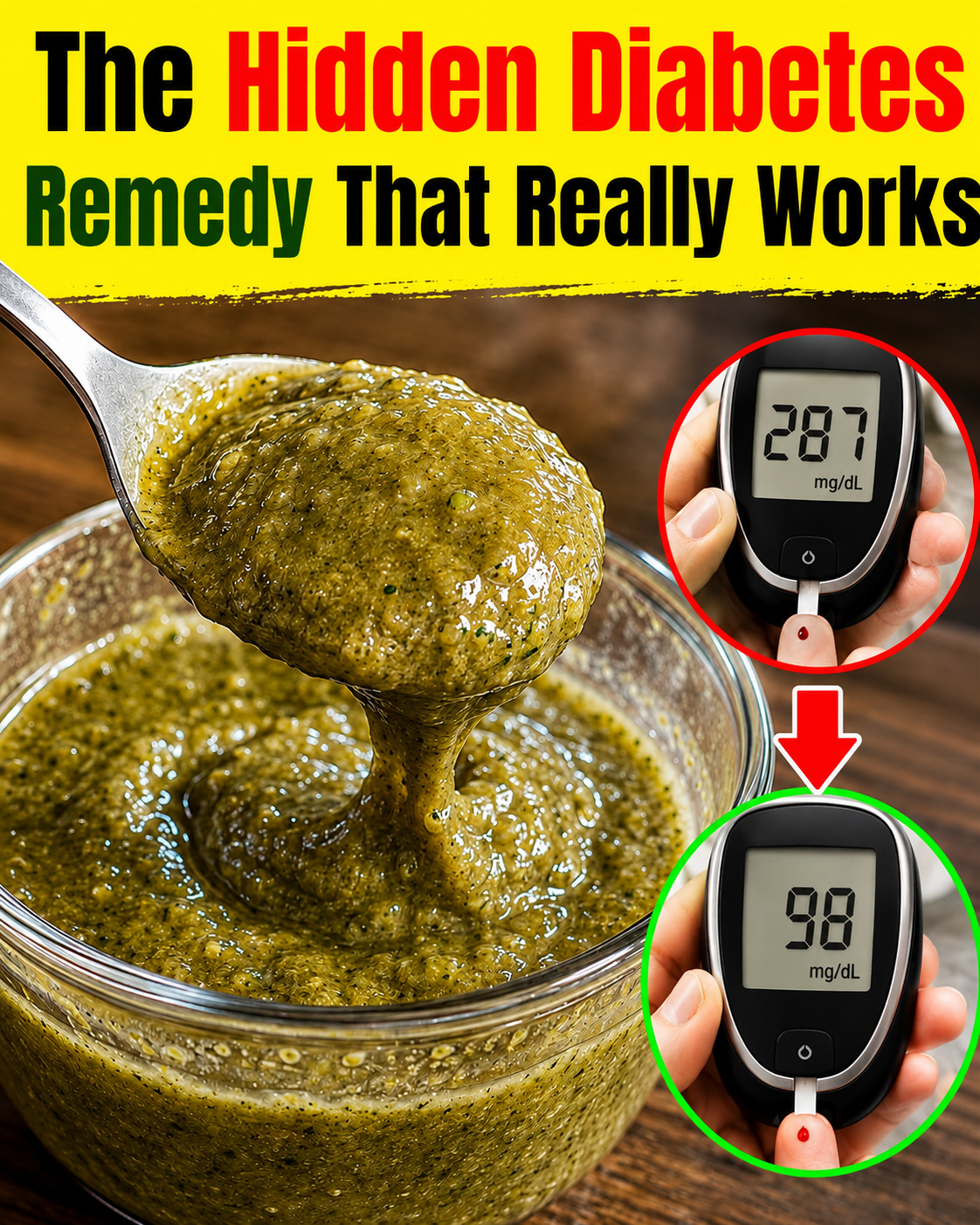
The image suggests that a homemade green mixture can dramatically lower blood sugar—from 287 mg/dL to 98 mg/dL. While this type of claim may attract attention online, there is no reliable evidence that a homemade mixture or single food can cure diabetes or safely produce such a rapid change in blood glucose.
However, some foods and lifestyle habits can support healthy blood-sugar management. The key is understanding what actually works and using evidence-based approaches.
What Is Blood Sugar?
Blood sugar, or blood glucose, is the main source of energy for the body’s cells. After eating, carbohydrates are broken down into glucose, which enters the bloodstream. The hormone insulin helps move glucose from the blood into cells.
In people with diabetes, the body either does not produce enough insulin or does not use it effectively. This can cause blood glucose levels to remain too high.
Can a Homemade Remedy Cure Diabetes?
No single drink, paste, herb, seed, or food has been proven to cure diabetes.
Some ingredients commonly used in homemade remedies may contain fiber, antioxidants, or other nutrients that can be part of a healthy diet. But their effects should not be confused with medical treatment.
If you have diabetes, do not stop prescribed medication or insulin because of a social-media recipe.
Why Can Blood Sugar Change So Quickly?
A glucose reading can change because of several factors, including:
- Food and carbohydrate intake
- Medication or insulin
- Physical activity
- Stress
- Illness or infection
- Dehydration
- Timing of the measurement
- Differences between glucose meters and testing conditions
Therefore, a before-and-after image showing 287 mg/dL and 98 mg/dL does not prove that a particular food or homemade mixture caused the change.
Foods That Can Support Better Blood-Sugar Control
Instead of looking for a “miracle remedy,” focus on an overall eating pattern.
1. High-Fiber Foods
Vegetables, beans, lentils, whole grains, nuts, seeds, and some fruits provide fiber. Fiber can slow digestion and help reduce rapid rises in blood glucose after meals.
2. Non-Starchy Vegetables
Include foods such as:
- Spinach
- Broccoli
- Cucumber
- Tomatoes
- Peppers
- Green beans
- Cauliflower
These foods are generally nutrient-dense and relatively low in carbohydrates.
3. Protein-Rich Foods
Protein can help make meals more satisfying. Examples include eggs, fish, chicken, beans, lentils, plain yogurt, and other suitable protein sources.
4. Healthy Fats
Nuts, seeds, avocado, and olive oil can be included in balanced meals. Portion size still matters because many sources of healthy fat are calorie-dense.
A Simple Plate Method
One practical approach is to divide your plate into sections:
½ plate: non-starchy vegetables
¼ plate: protein
¼ plate: carbohydrate-rich foods such as whole grains, beans, or other appropriate portions
This can be easier to follow than completely eliminating carbohydrates.
Exercise Also Matters
Regular physical activity can help the body use glucose more effectively.
Walking after meals, strength training, cycling, swimming, or other suitable activities may support blood-sugar management.
If you have diabetes or another medical condition, choose an activity level that is appropriate for you and follow your healthcare professional’s advice.
Be Careful With “Natural Diabetes Cures”
The word “natural” does not automatically mean safe or effective.
Some herbs and supplements can interact with diabetes medications and potentially cause blood sugar to become too low. Others may have unpredictable doses or limited evidence supporting their use.
Before regularly using an herbal product or supplement for blood sugar, discuss it with a qualified healthcare professional.
What About a Blood Sugar Reading of 287 mg/dL?
A reading of 287 mg/dL (15.9 mmol/L) is high and should not simply be treated with a homemade remedy.
If you obtain a very high reading, follow your diabetes care plan and seek medical advice, especially if high readings persist.
If high blood sugar occurs with symptoms such as vomiting, severe weakness, confusion, difficulty breathing, or other concerning symptoms, urgent medical evaluation may be necessary.
The Bottom Line
There is no secret homemade recipe that has been proven to cure diabetes or reliably reduce blood glucose from 287 to 98 mg/dL.
The most dependable approach is a combination of:
- A balanced, high-fiber eating pattern
- Appropriate physical activity
- Regular blood-glucose monitoring when recommended
- Taking prescribed medication as directed
- Maintaining a healthy weight when appropriate
- Regular medical checkups
- Working with a healthcare professional on an individualized diabetes plan
A healthy food can be part of diabetes management, but it should not replace proven medical treatment.
Important Disclaimer
This article is for general educational purposes only and is not medical advice. Diabetes management should be individualized with a qualified healthcare professional. Do not change or stop diabetes medication based on an online recipe or social-media claim.