

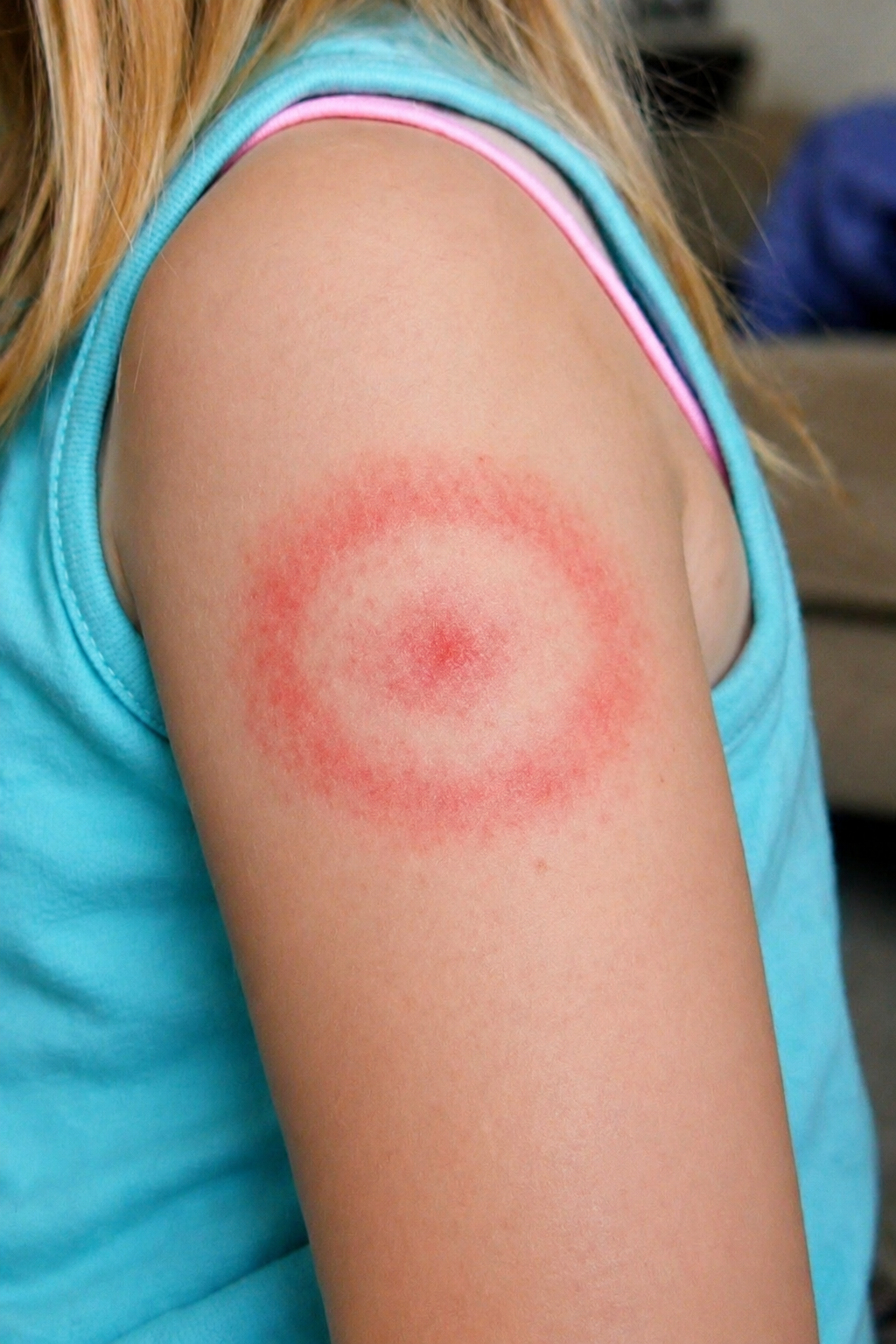
A large, circular red rash that seems to be spreading can be alarming, especially when it appears overnight. While many skin rashes are harmless, some deserve prompt medical attention. If your child has developed a ring-shaped rash like the one shown, it’s important to understand the possible causes and know when to seek care.
Important: A photo alone cannot confirm a diagnosis. If the rash is growing, or if your child has other symptoms, she should be evaluated by a healthcare professional as soon as possible.
What Could Cause a Red Ring-Shaped Rash?
Several conditions can produce a circular rash:
1. Erythema Migrans (Possible Lyme Disease)
One of the most recognized causes is erythema migrans, the characteristic rash associated with Lyme disease. It often:
- Begins several days to weeks after a tick bite.
- Expands gradually over time.
- May develop a “bull’s-eye” appearance.
- Is usually not itchy or painful.
Not every child remembers being bitten by a tick, so the absence of a known bite does not rule it out.
2. Ringworm (Tinea Corporis)
Despite its name, ringworm is a fungal infection—not a worm. It usually:
- Forms a circular rash with a raised, scaly border.
- Is often itchy.
- Grows slowly outward.
3. Insect Bite Reaction
Some insect bites can trigger a large, circular area of redness. These reactions are usually temporary but should be monitored if they continue to expand.
4. Other Skin Conditions
Certain allergic reactions, inflammatory skin conditions, or less common infections can also create ring-shaped rashes.
Should You Rush to the Emergency Room?
In most cases, a child with a ring-shaped rash who is otherwise feeling well does not need emergency care. However, you should seek immediate medical attention if your child develops:
- Difficulty breathing.
- High fever.
- Severe headache or neck stiffness.
- Rapidly spreading redness with intense pain.
- Swelling of the face or lips.
- Confusion or unusual drowsiness.
When Should You See a Doctor?
Arrange a medical evaluation the same day or within 24 hours if:
- The rash continues to expand.
- Your child may have been exposed to ticks.
- The rash has a bull’s-eye appearance.
- She develops fever, fatigue, joint pain, or muscle aches.
- The rash does not improve after a few days.
Early treatment is important if Lyme disease is suspected.
What You Can Do at Home
Until your child is seen by a healthcare provider:
- Keep the area clean and dry.
- Avoid scratching or irritating the rash.
- Take a photo of the rash and note whether it increases in size.
- Check for additional rashes or signs of a tick bite.
- Do not start antibiotic or antifungal medications unless advised by a healthcare professional.
The Bottom Line
A spreading, ring-shaped rash should not be ignored. While it could be something relatively harmless, it may also represent erythema migrans, the early skin rash of Lyme disease, which benefits from prompt diagnosis and treatment. Because your daughter’s rash appears to be enlarging and is not itchy, it’s a good idea to have her evaluated by a healthcare provider today, even if she otherwise feels well.
Disclaimer: This article is for educational purposes only and should not replace professional medical advice, diagnosis, or treatment. If you are concerned about your child’s health, contact a qualified healthcare provider promptly.