

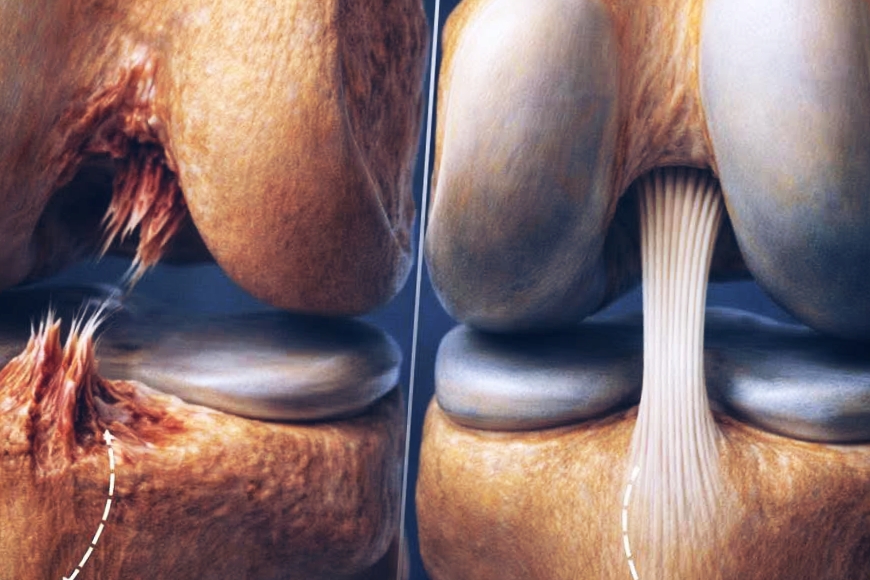
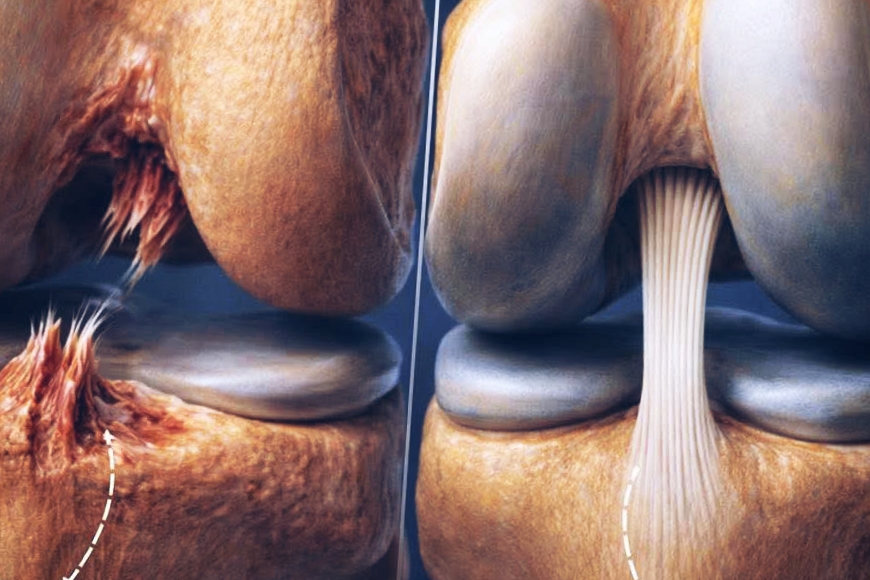
Understanding the role of the ACL in the knee
The Anterior Cruciate Ligament, commonly known as the ACL, is one of the most important structures in the knee joint. Its main function is to stabilize the knee by preventing the shinbone (tibia) from moving too far forward in relation to the thighbone (femur).
When this ligament tears, the knee can lose a significant amount of stability, making movement more difficult and sometimes painful.
How an ACL injury usually happens
A tear of the anterior cruciate ligament typically occurs during sudden or intense movements involving the knee. These injuries are particularly common in sports and physical activities.
Common causes include:
- Sudden changes in direction
- Rapid twisting of the knee
- Jumping and landing awkwardly
- Direct impacts during sports activities
Because of these movements, ACL injuries frequently occur in sports such as football, basketball, skiing, and rugby.
Symptoms of a torn ACL
Many people who experience an ACL tear report hearing or feeling a distinct “pop” inside the knee at the moment of injury.
Shortly after, several symptoms may appear, including:
- Intense knee pain
- Rapid swelling of the joint
- A feeling that the knee is unstable or “giving way”
- Difficulty walking or putting weight on the leg
These symptoms often appear within the first few hours after the injury.
How doctors confirm the diagnosis
To diagnose a torn ACL, doctors usually begin with a clinical examination of the knee. During this evaluation, they assess the stability of the joint and check for signs of ligament damage.
In many cases, imaging tests such as an Magnetic Resonance Imaging are recommended. MRI scans allow doctors to clearly view the ligaments and other internal structures of the knee, helping confirm the extent of the injury.
Does an ACL tear always require surgery?
Not all ACL injuries require the same treatment. The approach depends on several factors, including:
- The patient’s age
- Level of physical activity
- Degree of knee instability
- Presence of other knee injuries
Some individuals can recover with physical therapy and muscle-strengthening programs designed to stabilize the knee. In other cases—especially for athletes or highly active individuals—surgical reconstruction of the ligament may be recommended.
Why medical evaluation is important
A torn ACL is a significant knee injury that should always be evaluated by a medical professional. Early diagnosis and appropriate treatment can help restore stability, improve mobility, and reduce the risk of long-term complications.
With proper care, many people are able to return to their normal activities and sports after recovery.