
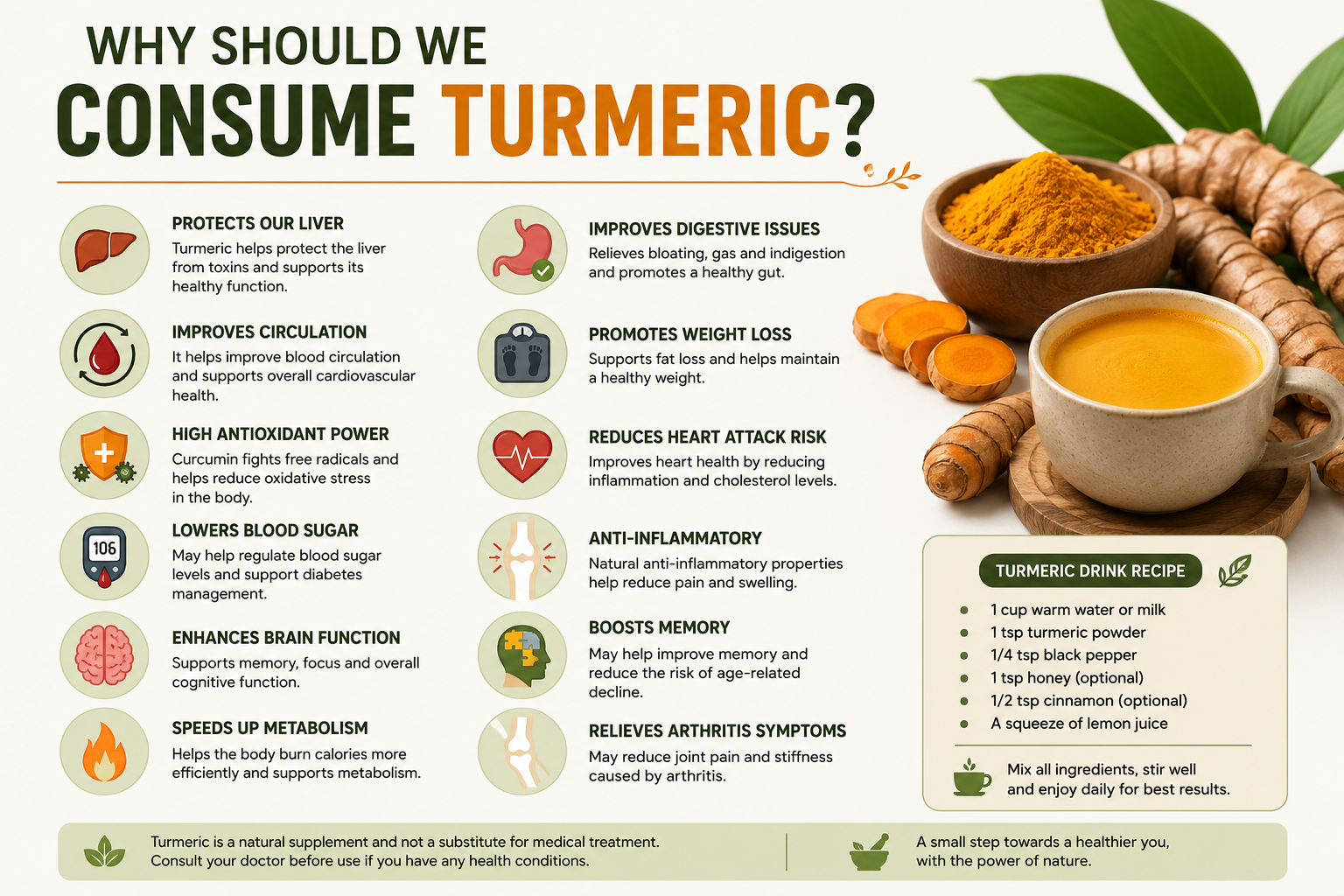
Turmeric has been used for thousands of years in traditional medicine and cooking. Its vibrant golden color comes from curcumin, a natural compound with antioxidant and anti-inflammatory properties. While turmeric is not a miracle cure, research suggests it may support overall health when combined with a balanced diet and healthy lifestyle.
What Is Turmeric?
Turmeric (Curcuma longa) is a spice from the ginger family that is widely used in Asian cuisine. Besides adding flavor and color to food, it contains beneficial plant compounds that may help protect the body from oxidative stress and inflammation.
Potential Health Benefits of Turmeric
1. Supports Liver Health
The antioxidants in turmeric may help protect liver cells from oxidative damage and support normal liver function.
2. Promotes Healthy Blood Circulation
Turmeric may contribute to healthy circulation by supporting blood vessel function, which is important for overall cardiovascular health.
3. Rich in Antioxidants
Curcumin helps neutralize harmful free radicals, reducing oxidative stress that can damage cells over time.
4. Helps Maintain Healthy Blood Sugar Levels
Some studies suggest turmeric may support healthy blood sugar regulation when combined with a healthy diet and regular exercise. It should not replace prescribed diabetes treatment.
5. Supports Brain Function
Curcumin has been studied for its potential role in supporting memory, learning, and overall cognitive health.
6. May Support a Healthy Metabolism
A healthy metabolism is influenced by many factors. Turmeric may play a small supportive role when combined with proper nutrition and physical activity.
7. Aids Digestion
Turmeric may help stimulate digestion and reduce occasional bloating or discomfort after meals.
8. Supports Weight Management
Although turmeric alone does not cause weight loss, it may complement a healthy lifestyle by supporting metabolic health.
9. Supports Heart Health
Its anti-inflammatory and antioxidant effects may contribute to maintaining a healthy cardiovascular system.
10. Natural Anti-Inflammatory Properties
Curcumin is widely recognized for helping reduce inflammation, which is linked to many chronic conditions.
11. May Help Maintain Memory
Emerging research suggests turmeric may help protect brain cells and support memory as we age.
12. May Ease Joint Discomfort
Some people with osteoarthritis report reduced joint pain and stiffness after using turmeric regularly, although results vary.
Simple Turmeric Drink Recipe
Ingredients
- 1 cup warm water or milk
- 1 teaspoon turmeric powder
- ¼ teaspoon ground black pepper
- 1 teaspoon honey (optional)
- ½ teaspoon cinnamon (optional)
- A squeeze of fresh lemon juice (optional)
Instructions
- Warm the water or milk without boiling.
- Stir in the turmeric and black pepper.
- Add cinnamon if desired.
- Sweeten with honey and add lemon juice.
- Stir well and enjoy once daily.
Tip: Black pepper contains piperine, which can significantly improve the absorption of curcumin.
Safety Considerations
Turmeric is generally safe when used as a spice in food. However, high-dose supplements may not be suitable for everyone. Consult a healthcare professional before using turmeric supplements if you:
- Take blood-thinning medications.
- Have gallbladder disease.
- Are pregnant or breastfeeding.
- Have a medical condition requiring ongoing treatment.
Final Thoughts
Turmeric is a flavorful spice with promising health benefits, particularly due to its antioxidant and anti-inflammatory compounds. While it may support digestion, heart health, brain function, and joint comfort, it is not a cure for disease. The greatest benefits come from incorporating turmeric into a balanced diet, staying physically active, and following medical advice when managing health conditions.